

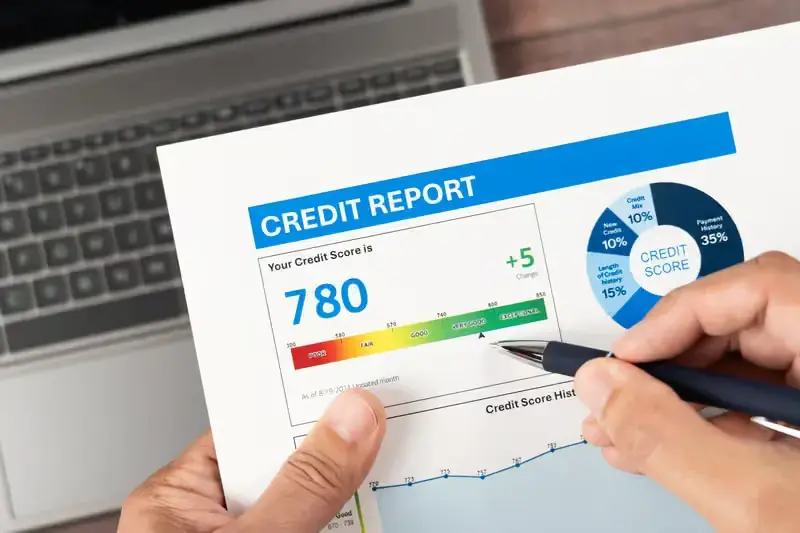
A credit report is a detailed record of how you borrow and repay money, and lenders read it to decide whether to approve you and what rate to charge. Because lenders charge higher rates when a borrower looks riskier, credit report loan interest rates are tightly linked: a stronger report usually earns a lower rate. Over the life of a car loan or mortgage, that difference can add up to thousands of dollars.
This guide explains what is inside your report, how credit report loan interest rates are set, and what you can do to improve them. The rules and figures below apply to the United States.
What Is a Credit Report?
A credit report is a file kept by a credit bureau that lists your credit accounts and how you have handled them. Think of it as a financial history written by the companies you borrow from.
Three national bureaus keep these files: Equifax, Experian, and TransUnion. Each one collects data from lenders and creditors. Your three reports can differ slightly because not every lender reports to all three. That is why many experts suggest checking all of them.
What Information Does a Credit Report Contain?
Your report has four main parts. The first is personal information, such as your name, address, and Social Security number. The second is your account list, which shows credit cards, auto loans, mortgages, and student loans, along with balances, limits, and payment history.
The third part is public records and collections, such as accounts sent to a collection agency or bankruptcies. The fourth is inquiries, which show who has checked your credit. Each part tells a lender something different about your habits and your level of risk.
What Is the Difference Between a Credit Report and a Credit Score?
Your credit report is the full record. Your credit score is a three digit number calculated from that record. Most scores range from 300 to 850, and a higher number means lower risk in the eyes of a lender.
Lenders use both. The score gives a quick summary, while the report shows the story behind it. Two people can have the same score for very different reasons, so a lender may read the report before setting the final rate. When people search for credit report loan interest rates, they usually want to know how that story turns into a price.
How Does a Credit Report Affect Loan Interest Rates?
Lenders set rates based on risk. If your report shows late payments, high balances, or recent defaults, the lender expects a higher chance you will not repay. To cover that risk, it charges more interest. If your report shows steady, on time payments, the lender charges less because it expects to be repaid.
This is why credit report loan interest rates move together. A small change in your report can move you into a different pricing tier. Lenders usually group borrowers into tiers, such as super prime, prime, near prime, and subprime, and each tier has its own range of rates.
Why Do Lenders Charge Higher Rates for Lower Scores?
Interest is the price of taking a risk. A lender that makes many loans knows some borrowers will fall behind, so it charges riskier borrowers more. The rate is not a punishment. It is how lenders protect themselves while still saying yes.
How Much Can Credit Report Loan Interest Rates Cost You?
The gap is large. Experian’s Q2 2026 data, reported by Bankrate, shows average new car rates of 4.41 percent for scores from 781 to 850, 6.15 percent for scores from 661 to 780, 9.71 percent for scores from 601 to 660, and 13.52 percent for scores from 501 to 600.
Here is what that means on a $30,000 new car loan over 60 months. At 4.41 percent, the payment is about $558 a month and total interest is about $3,484. At 13.52 percent, the payment is about $691 a month and total interest is about $11,436. That is nearly $8,000 more for the same car. These are averages, and your offer will vary by lender, term, and down payment.
What Affects Credit Report Loan Interest Rates the Most?
Scoring models weigh different parts of your report. FICO, the most widely used model, says payment history makes up about 35 percent of your score and amounts owed about 30 percent. Length of credit history counts for about 15 percent, new credit for 10 percent, and credit mix for 10 percent.
That means two habits do most of the work: paying every bill on time and keeping balances low. If you want better credit report loan interest rates, start with those two before worrying about the smaller factors.
What Is Credit Utilization?
Credit utilization is the share of your available revolving credit that you are using. If you have a $10,000 total limit and a $3,000 balance, your utilization is 30 percent. Lower is better. Many lenders like to see it under 30 percent, and borrowers with the best scores often keep it much lower.
Do Hard Inquiries Hurt Your Credit Report?
A hard inquiry happens when a lender checks your credit because you applied for new credit. One inquiry has a small effect, but several in a short time can look risky and raise your credit report loan interest rates. Hard inquiries stay on your report for two years, though their effect fades sooner.
How Do You Get Your Free Credit Report?
You can get free reports from all three bureaus at AnnualCreditReport.com, the official site. Equifax, Experian, and TransUnion made free weekly access permanent in 2023, so you can check as often as you like without paying.
Beware of lookalike sites that ask for a card number or push paid subscriptions. The official site does not charge for your reports. Checking your own report does not hurt your score. Review it a few months before you apply for a big loan, because that is the first step toward lower credit report loan interest rates.
What Should You Look For on Your Credit Report?
Look for anything that is wrong or unfamiliar. Check that your name, address, and account numbers are correct. Watch for accounts you do not recognize, because they can signal identity theft.
Errors matter because they can raise your rate without your knowing. A wrong late payment or a balance that belongs to someone else can push you down a tier. A few minutes of checking can save you real money on credit report loan interest rates.
How Do You Dispute an Error?
Contact the credit bureau that shows the error, explain what is wrong, and attach proof such as a statement or payment record. You can also contact the lender that reported it. According to the Consumer Financial Protection Bureau, a bureau generally must investigate within 30 days and tell you the result within five business days after it finishes.
The timeline can stretch to 45 days if you file after getting your free annual report. It can also gain 15 extra days if you send new information during the first 30.
How Can You Improve Your Credit Report Before Applying for a Loan?
Improvement takes time, but some steps work faster than others. The best plan is simple: pay on time, lower balances, avoid new debt before a big application, and fix errors. Even a few months of better habits can move you toward a better pricing tier.
Should You Pay Down Balances First?
Yes, if you carry credit card debt. Lower balances reduce your utilization, which can raise your score within a billing cycle or two. Pay down the cards closest to their limits first, and avoid closing old accounts.
Should You Avoid New Credit Before a Loan?
Usually yes. Opening a new card or financing a store purchase right before a mortgage or auto loan can lower your score and push up your credit report loan interest rates. Wait until after you close on the loan. If you are shopping for the same type of loan, multiple lender checks within a short window are generally treated as one, often 14 to 45 days depending on the scoring model. Finish your rate shopping inside that window.
How Long Do Negative Items Stay on Your Credit Report?
Most negative items, such as late payments, collections, and charge offs, stay for seven years. Chapter 7 bankruptcies can stay for ten years, and Chapter 13 bankruptcies for seven. Positive accounts in good standing can stay much longer.
The good news is that old negatives hurt credit report loan interest rates less each year. A late payment from six years ago matters far less than one from last month. Keep your recent history clean, and your credit report loan interest rates will improve as old problems drop off.
Conclusion
A credit report is the record lenders use to judge you, and credit report loan interest rates follow it closely. Better reports earn lower rates, and the savings can reach thousands of dollars on a single loan. The steps are clear: get your free reports, fix errors, pay on time, keep balances low, and apply for new credit only when you need it.
Start today. Pull your reports from AnnualCreditReport.com, review each section, and write down what to fix. The sooner you act on your credit report loan interest rates, the more room you have to save before you apply.
Frequently Asked Questions
1. What is a credit report in simple terms?
A credit report is a record of your credit accounts, balances, and payment history kept by a credit bureau. Lenders read it to decide whether to lend to you and at what rate. It also lists collections, public records, and recent credit checks.
2. How does a credit report affect my loan interest rate?
Lenders use your credit report to measure risk. Late payments and high balances signal higher risk, so you pay more. A clean history signals lower risk, so you qualify for lower rates. That is how credit report loan interest rates rise and fall.
3. How can I get my free credit report?
Go to AnnualCreditReport.com, the official site, and request your reports from Equifax, Experian, and TransUnion. The bureaus now offer free weekly access, so you can check as often as you want. Never pay for a report you can get there for free.
4. What credit score do I need for the best loan interest rates?
Lenders reserve their lowest rates for top tier borrowers. In auto loan data, scores from 781 to 850 get the lowest average rates, and prime scores from 661 to 780 come next. Requirements vary by lender and loan type, so compare several offers.
5. How long does it take to fix errors on a credit report?
A credit bureau generally has 30 days to investigate a dispute and five business days to share the results. The timeline can extend to 45 days in some cases. Send clear proof, keep copies, and follow up if you do not hear back.