

Most marketing plans fail for a simple reason. The team picks tactics before it picks a strategy. A new channel looks promising, so they add it. A competitor posts a viral video, so they copy it. Months later, the budget is spread thin and nobody can explain what is working. This marketing approach types guide fixes that by showing you how to choose a framework, build a channel mix, and map every customer touchpoint in the right order.
What Does a Marketing Approach Types Guide Cover?
A marketing approach is the overall way you plan to reach and win customers. It answers three questions. Who are you talking to? What do you want them to do? How will you reach them? The answers shape your frameworks, your channels, and the moments where customers meet your brand.
Why the Right Approach Matters
Marketing is under pressure. Gartner’s 2026 CMO Spend Survey, which covered 401 marketing leaders in North America, the UK, and Europe, found that budgets average 7.8 percent of company revenue, up slightly from 7.7 percent in 2025. Yet 56 percent of CMOs said their budget is not enough to deliver their 2026 strategy. When money is tight, a clear approach stops waste. A good marketing approach types guide helps you spend on what fits your goals and drop what does not.
The Main Approach Types at a Glance
Most marketing falls into a few pairs. Inbound marketing draws people in with useful content, search visibility, and community. Outbound marketing reaches out through ads, email, and sales calls. Push strategies promote a product to audiences who may not be looking. Pull strategies build demand so buyers come to you. B2B marketing serves teams with long buying cycles and several decision makers, while B2C marketing often targets individuals with faster choices. Account based marketing treats key accounts as markets of one. Brand marketing builds long term memory, and performance marketing chases measurable actions now. Strong teams mix several of these types instead of picking one. This marketing approach types guide uses these labels throughout, so keep them handy.
Frameworks That Shape Your Strategy
Frameworks give your thinking a structure. They keep a team from jumping to tactics too soon. Here are the ones that matter most.
The 4Ps and 7Ps
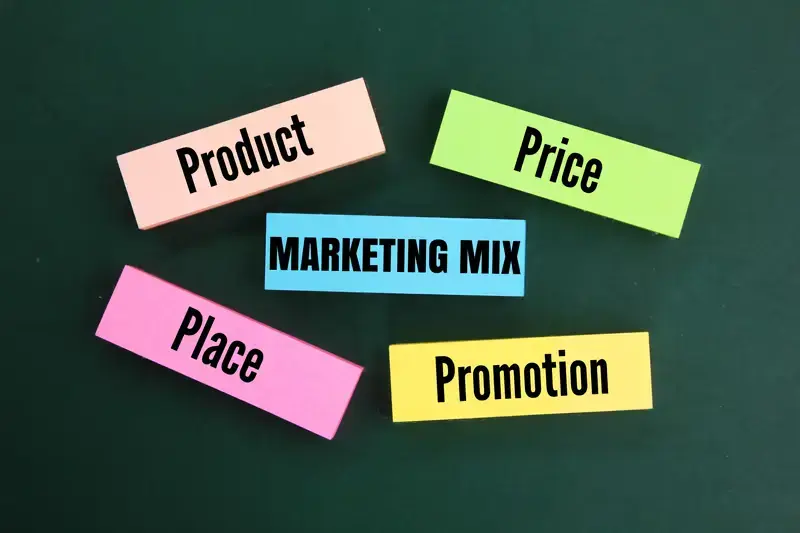
The 4Ps are product, price, place, and promotion. E. Jerome McCarthy introduced them in 1960, and they remain the quickest way to check whether your offer makes sense. Service businesses often use the 7Ps, which add people, process, and physical evidence. A consultancy, for example, wins or loses on the quality of its people and the clarity of its process as much as on its price. Use the 4Ps to review your offer and the 7Ps when customers experience a service.
STP: Segment, Target, Position
STP stands for segmenting, targeting, and positioning. First, you divide the market into groups with shared needs. Next, you pick the groups you can serve best. Finally, you decide how you want those groups to see you compared with rivals. Most weak campaigns skip this step. They speak to everyone, so they persuade no one. Spend time on STP before you pick a single channel, because it guides every message that follows.
Funnel and Flywheel Models
The funnel moves people from awareness to interest, decision, and purchase. It is easy to explain, and it works well for planning content by stage. The flywheel treats satisfied customers as fuel for growth. Happy buyers refer others, leave reviews, and return. The funnel focuses on winning customers, while the flywheel focuses on keeping them. Many modern teams use both, because acquisition and retention both affect profit. Think of the funnel as a map for new buyers and the flywheel as a map for returning ones.
How to Choose a Framework
Match the framework to your problem. If your offer feels unclear, start with the 4Ps. If your messages feel generic, start with STP. If you win customers but lose them quickly, look at the flywheel. Do not try to apply every model at once. Pick one, run it for a quarter, and judge the results with a simple measure such as cost per lead or repeat purchase rate. A marketing approach types guide is only useful if it leads to a decision.
Building the Right Channel Mix
A channel mix is the set of places where you reach customers. It should reflect where your audience spends time, not where your competitors happen to be loud.
Owned, Earned, Paid, and Shared Media
The PESO model, popularized by Gini Dietrich, sorts channels into four groups. Paid media includes search ads, social ads, and sponsorships. Earned media covers press coverage, reviews, and mentions that others give you. Shared media is social conversation. Owned media is what you control, such as your website, blog, email list, and app. Paid media is fast but stops when the budget stops. Owned media takes time to build but keeps working. A healthy mix uses paid media to test ideas and owned media to keep what you win.
Match Channels to Goals
Start with the goal, then pick the channel. For awareness, consider video, social, and public relations. For consideration, use search, comparison pages, webinars, and case studies. For conversion, use email, retargeting, and clear product pages. For loyalty, use customer support, newsletters, and communities. This marketing approach types guide suggests picking two or three channels per goal at first. It is better to do three channels well than eight badly. Review each channel after thirty days and ask whether it moved the goal you set.
Budget the Mix Wisely
Money should follow evidence. Gartner found that CMOs now put an average of 15.3 percent of their marketing budgets into artificial intelligence, yet only 30 percent say their organizations are mature enough to scale it. That gap is a warning. Spend on tools only after your process is clear. A common rule of thumb is 70 percent on proven channels, 20 percent on promising ones, and 10 percent on experiments. Treat it as a starting point, not a law, and adjust as data comes in. Revisit your marketing approach types guide each quarter to see whether the budget split still matches your goals.
A Simple Example
Picture a local bakery that wants more weekday orders. It chooses a pull strategy built on owned and earned media. The owner updates her Google Business profile, collects customer reviews, and sends a weekly email with a small offer. She adds a modest paid search budget for people searching “birthday cake near me.” Each channel has one job, and the owner tracks orders from each one. Within a few months she knows which channel earns its place, and she can move money without guessing. It is a small case, but it shows how a marketing approach types guide works in practice.
Mapping Customer Touchpoints
A touchpoint is any moment when a person meets your brand. It can be an ad, a search result, a review, a delivery box, or a support chat. Customers do not see channels. They see one experience.
How Many Touchpoints Do Buyers Use?
More than you might think. A 2025 impact.com survey of 1,000 US adults found that shoppers typically research a product three or more times before they buy, and that they engage with brands three or more times across digital channels. Consumers earning above 250,000 dollars engaged five or more times. Another analysis of 100 online stores put the average at 2.9 touchpoints to convert a shopper. The exact number varies, but the lesson is steady. One touch rarely closes a sale.
Expectations are high at each of those moments. McKinsey research reports that 71 percent of consumers expect personalized interactions from companies, and 76 percent feel frustrated when they do not get them. A shopper who sees a generic message after browsing a product will notice the gap.
Build a Touchpoint Map
Start with a simple grid. List the stages across the top: discover, research, decide, buy, and use. Down the side, list every touchpoint you can find at each stage. Include the ones you do not control, such as reviews and forums. Ask recent customers to walk you through how they found you. Their stories reveal steps you never planned. Then mark each touchpoint as strong, weak, or missing. Fix the weak points that sit closest to a sale first. This marketing approach types guide treats the map as your working document.
Measure and Close the Gaps
Tracking is messy, so aim for useful rather than perfect. The impact.com report notes that 83.8 percent of retail dollars are still spent in store, which makes digital attribution an incomplete picture. Use several signals together: campaign tags, customer surveys that ask how people heard of you, and simple promo codes for offline offers. Review results monthly. When a touchpoint loses people, ask a plain question: what does the customer need here that we are not giving them? Without a feedback loop, even a strong marketing approach types guide stays theory.
Putting the Marketing Approach Types Guide Into Action
Do not try to change everything at once. Use a ninety day plan. In the first month, choose one framework, define your target segment, and draw a touchpoint map. In the second month, pick two or three channels for your top goal and launch small tests. In the third month, review the data, keep what works, and cut what does not. Share the results with your team so everyone learns from them.
Keep one habit above all. Write a one page strategy that states your audience, your promise, your goal, and your channels. Review it every quarter. A short document everyone can read beats a long one that nobody opens.
Conclusion
Strong marketing is not about doing more. It is about choosing the right approach, using a framework to guide decisions, matching channels to goals, and caring about every moment a customer meets your brand. Use this marketing approach types guide as a checklist. Choose your approach, test your channel mix, map your touchpoints, and measure what happens. Start with one small change this week, and build from there.